|
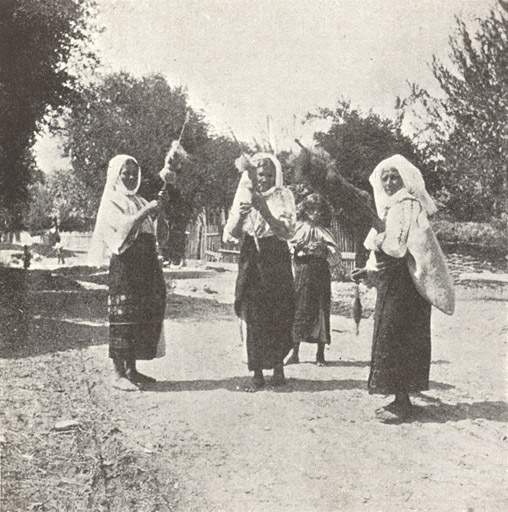
Beneath the gaudy scarves which they
tie on their heads plaits of hair hang down on both sides of their
faces—plaits that are decorated with every sort of coin, with little
splinters of coloured glass or metal, or strange-shaped charms or
holy medals that jingle as they move about. Round their necks hang
long strings of gaudy beads that shine and glisten on their
bronze-tinted skins.
Little modesty do these maidens show. They are loud and forward,
shameless beggars, quite indifferent if their torn shirts leave neck
and bosom half naked to the rays of the sun.
With flashing white teeth they will smile at you, arms akimbo, head
thrown back, a white pipe impudently stuck at the corner of their
mouths.
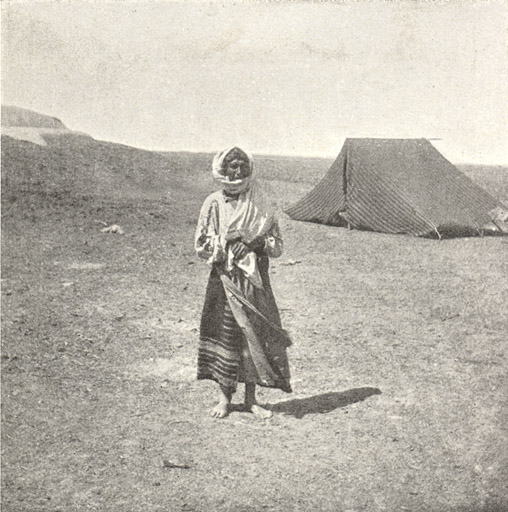
Indescribably graceful are these girls coming back to the camp at
evening, carrying large wooden water-pots on their heads. Over the
distance they advance, upright, with swinging stride, whilst the
water splashes in large drops over their cheeks. The sinking sun
behind them gives them the appearance of shadows coming from very
far out of the desert where the paths have neither beginning nor
end. . . .
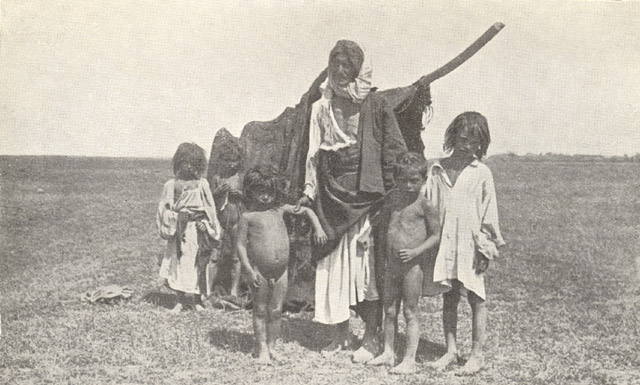
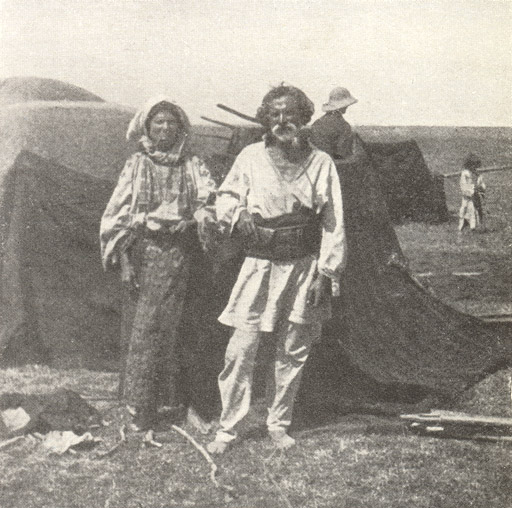
The men are no less picturesque than the women; they are covered
with filthy rags, and are mostly barefooted. But tribes have I
encountered less sordid, where the men wore high boots, baggy
trousers, and shirts with wide-hanging sleeves. These belonged to
more prosperous clans, the men particularly good-looking, with long
curling hair hanging on both sides of their faces. Evil-looking
creatures no doubt, but uncannily handsome nevertheless.
Most gipsies are tinkers by profession, by instinct they are
thieves. Leaving their women-folk to look after the tents, the men
will set out towards the villages, there to patch up pots and pans;
often one meets them several in file carrying bright copper vessels
on their backs. They grin at you, and never forget to stretch out a
begging hand.
Others have studied the gipsies' habits, morals, and ways; I have
only looked upon them with an artist's eye, and in that way they are
an unending source of joy.
Inconceivable is the bustle and noise when a camp breaks up. The
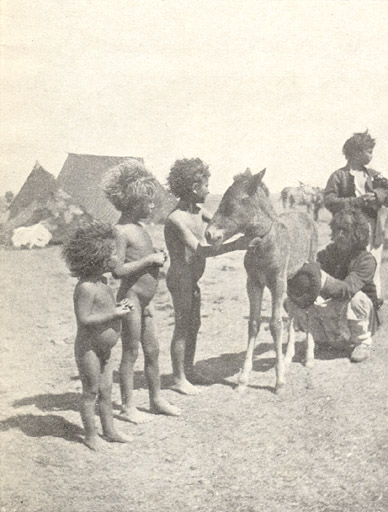
tent-poles are pulled out of the ground, the miserable horses that
have been seeking scarce nourishment from the withered wayside grass
are caught by the screeching children, who have easy work, as the
unfortunate creatures are hobbled and cannot escape. Resignedly they
let themselves be attached to the carts, the tent-poles, carpets,
pots and pans are once more transferred from the ground to the
vehicles that will transport them to another place, and thus onwards
. . . without end. . . .
The old crones are stowed away beneath all this baggage, and with
them the children too small to walk, the feeble old men, the
invalids, and those too foot-sore to tramp the weary way.
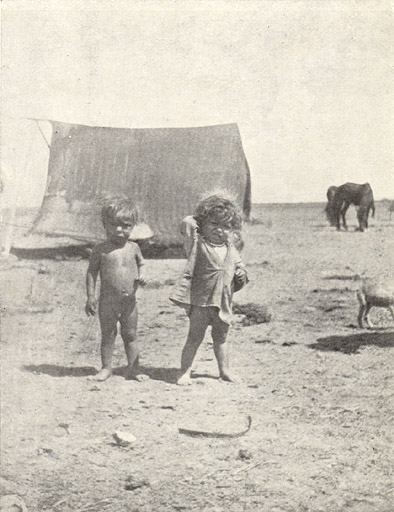
A delightful picture did I once perceive. Upon the back of a patient
donkey numerous tent-poles had been tied; how so small a beast could
carry them remains a mystery. Between these poles several small
naked babies had been fastened, their black eyes staring at me from
beneath mops of tousled, unkempt curls.
The donkey moved from place to place, grazing, the heavy poles
bobbed about, one or the other touching the ground, raising little
clouds of dust like smoke.
No concern was to be read on the faces of the babies; this mode of
transport was no doubt the usual thing. They looked like little
brown monkeys brought from warmer climes. . . .
I have often met old couples wandering together men and women bent
with age, weary, dusty, covered with rags, with pipes in their
mouths; wretched vagrants, but always perfectly picturesque. No
doubt they were going to tinker in some villages, for the men
carried on their backs the inevitable copper pots, whilst the old
hags had heavy sacks slung over their shoulders, a thick staff in
their hands. Along the sides of their earth-coloured cheeks grey
plaits of hair hung limply down, swinging as they went. It was to me
as though I had often met them before; I seemed to recognise their
eyes, their weary look, even the shell, sign of the fortune-teller,
that the women wore hanging from a string at their girdles; yet no
doubt they were but samples of the many wanderers among this people
who, homeless and foot-sore, are for ever roaming over the earth. .
. . |